

Land Rover Joe
Full Access Member
In conclusion:
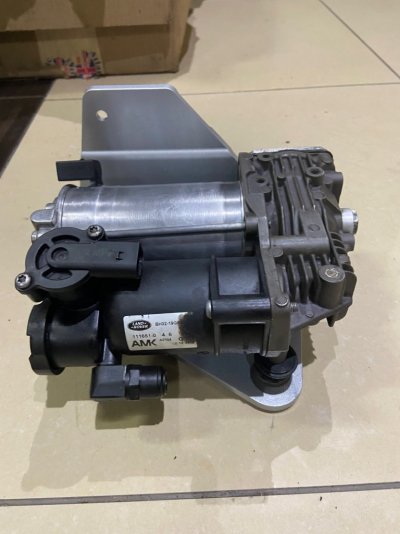
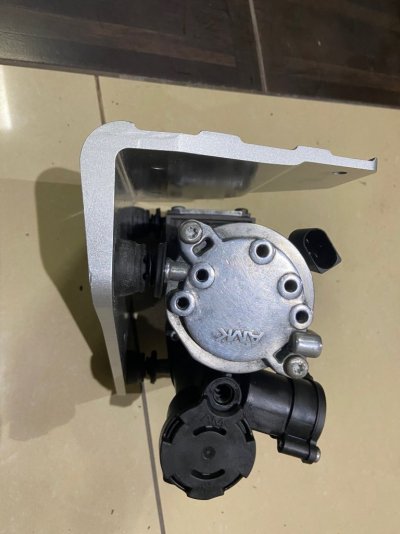
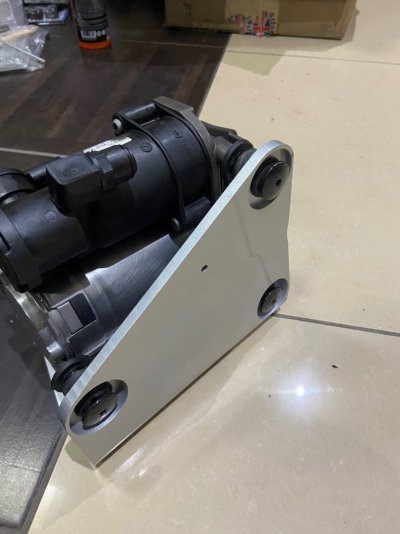
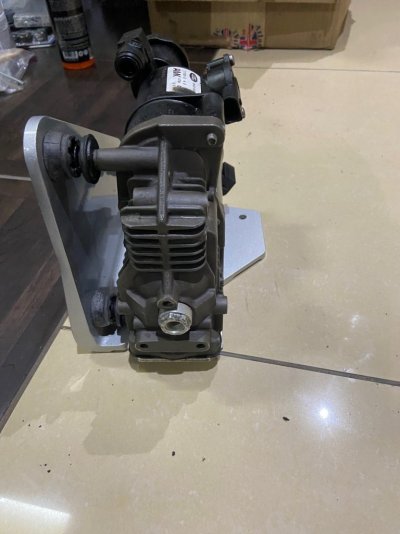
The AMK compressor is a pretty good unit but more touchy than its predecessor, the Hitachi. I kind of wish I just kept the Hitachi and did more services on the desiccant (my fault I blew it up).
Based on my experience with this unit, I would say the unit should be removed, cleaned / serviced, and desiccant replaced every ~ 2 years. Waiting 5 years, like I did, will cause a lot of extra wear so I am guessing 2-3 years is the sweet spot for this unit (so one wouldn't have to tear the whole thing down like I did here). If one doesn't overuse the compressor and does routine maintenance, then you could probably save off a complete tear down for 10-15 years.
The AMK is fairly easy to work on but there are some very important keys here (not easy parts):
First is the fasteners are tricky with the stupid torx heads and one must be careful with those when disassembling (we were not and stripped a couple...causing us to have to do bolt extraction with a stick welder). Using lubricants here and break free would be wise.
Second, the piston itself is really tricky. The bearing is on the crank and you need a press to get that bearing (hence piston) on and off. Meanwhile, there is no extra room in there to maneuver the bearing...which is how we broke it to begin with.
Third, most of these parts are aluminum. Great that they are lightweight and don't corrode...but not-so-great that it is easy to break something (crack) or strip out fasteners or that metal components will likely corrode even faster in there. Caution is needed when working on this unit as it is a bit delicate in this sense.
Fourth, the piston rings are something strange like cardboard; they are not strong and pretty much disintegrated when we pulled those parts out. So they definitely are wear items and will need replacing someday (again, with good servicing, probably after a decade but maybe before). The good news is that you get a tight seal, they are easy and cheap to replace, and I cannot imagine cardboard wearing the cylinders out or damaging them.
I hope that is helpful and I look forward to hearing other folks experiences, comments, observations, or critiques!
The AMK compressor is a pretty good unit but more touchy than its predecessor, the Hitachi. I kind of wish I just kept the Hitachi and did more services on the desiccant (my fault I blew it up).
Based on my experience with this unit, I would say the unit should be removed, cleaned / serviced, and desiccant replaced every ~ 2 years. Waiting 5 years, like I did, will cause a lot of extra wear so I am guessing 2-3 years is the sweet spot for this unit (so one wouldn't have to tear the whole thing down like I did here). If one doesn't overuse the compressor and does routine maintenance, then you could probably save off a complete tear down for 10-15 years.
The AMK is fairly easy to work on but there are some very important keys here (not easy parts):
First is the fasteners are tricky with the stupid torx heads and one must be careful with those when disassembling (we were not and stripped a couple...causing us to have to do bolt extraction with a stick welder). Using lubricants here and break free would be wise.
Second, the piston itself is really tricky. The bearing is on the crank and you need a press to get that bearing (hence piston) on and off. Meanwhile, there is no extra room in there to maneuver the bearing...which is how we broke it to begin with.
Third, most of these parts are aluminum. Great that they are lightweight and don't corrode...but not-so-great that it is easy to break something (crack) or strip out fasteners or that metal components will likely corrode even faster in there. Caution is needed when working on this unit as it is a bit delicate in this sense.
Fourth, the piston rings are something strange like cardboard; they are not strong and pretty much disintegrated when we pulled those parts out. So they definitely are wear items and will need replacing someday (again, with good servicing, probably after a decade but maybe before). The good news is that you get a tight seal, they are easy and cheap to replace, and I cannot imagine cardboard wearing the cylinders out or damaging them.
I hope that is helpful and I look forward to hearing other folks experiences, comments, observations, or critiques!