
George Perry - MB
Member
Parasitic drain after mechanic installed a high output alternator.
I'm no mechanic, yet a persistent problem solver, but I lack the tools and space to freely work this problem.
Its been a journey.
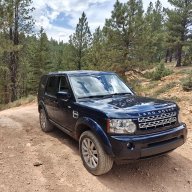
I have a 2012 LR4, 5L NA.
I completed a dual battery setup: AGM main X2 PWR (80 AH) + DL+ 135 AH LPF 2nd battery. I connected them with a Victron DC-DC charger 50A.
All was well, but because of the accessories it made sense to upgrade to a bolt compatible high output Alternator (JS Alternators - 170 A --> 340 A).
Now the issue.
Thursday the area Land Rover specialist (non dealer) replaced the OEM 170A with the after-market ** alternator and a 3-wire kit.
Aside from a few faults, which I cleared with my GAP IIX G3 BT all seemed well.
I returned to my base camp for the 4th July and started the Rover back up lunch time on Sunday - it was DEAD!
I had to jump start it. GAP tool showed 7% SOC for the main battery. I also have a Victron smart shunt for the LPF, it showed 100% SOC.
I had to go to a volunteer shift, so I left it idling and checked on it through out for a couple hours. Eventually it returned to 100% SOC for the main AGM.
This was last night JUL-6th (Sun), 2025.
Now this morning at 7AM my main AGM battery per GAP IIX tool showed 60% SOC. I'm now charging it back up with a 3A AGM / LPF charger.
Notes:
1. The mechanic connected one of the 3-wire directly to the LPF 2nd battery from the alternator.
2. My first post months ago was wrestling with a LPF main (single battery) which created all sorts of havoc. I abandoned the idea, went with the dual battery thanks to some of you. But now I'm stuck
The area mechanics aren't used to dual battery set-ups and aren't concerned with the different battery chemistries. This worries my because online and my own experience shows it does matter.
My GAP tool showed stable voltage and current prior to the upgrade.
Now the same live values show some fluctuations - is this a sign or to be expected?
I have a scheduled return visit to the area mechanic this Thursday. They couldn't figure out my earlier charge fault problem, but ultimately I caused it when I put the TSB brown-blue BMS wire on the negative pole of the main battery, essentially not powering up the Rover's BMS. Once that was correctly wired, the original alternator went from stable 14.0V to stable 14.8V. This cleared the fault and improved overall charging performance allowing the dual battery set-up to equalize and top of the charging.
The upgraded alternator has a smaller pulley and a 1/2 inch shorter belt was needed, otherwise it was bolt compatible and connections equivalent (Likely took stock case, upgraded windings and internals to improve output performance).
I think the trouble is the direct connection from the alternator to the 2nd (LFP) battery which effectively bypasses the victron dc-dc charger that mitigates the profile differences between LA / AGM & LFP battery chemistries.
But I don't understand the theory of how a powered down car can lose that much energy in such a short time by having that 2nd positive 1-guage wire. Chat GPT or other online answers seem to say this is the likely cause.
Any thoughts on how to proceed?
I'm no mechanic, yet a persistent problem solver, but I lack the tools and space to freely work this problem.
Its been a journey.
I have a 2012 LR4, 5L NA.
I completed a dual battery setup: AGM main X2 PWR (80 AH) + DL+ 135 AH LPF 2nd battery. I connected them with a Victron DC-DC charger 50A.
All was well, but because of the accessories it made sense to upgrade to a bolt compatible high output Alternator (JS Alternators - 170 A --> 340 A).
Now the issue.
Thursday the area Land Rover specialist (non dealer) replaced the OEM 170A with the after-market ** alternator and a 3-wire kit.
Aside from a few faults, which I cleared with my GAP IIX G3 BT all seemed well.
I returned to my base camp for the 4th July and started the Rover back up lunch time on Sunday - it was DEAD!
I had to jump start it. GAP tool showed 7% SOC for the main battery. I also have a Victron smart shunt for the LPF, it showed 100% SOC.
I had to go to a volunteer shift, so I left it idling and checked on it through out for a couple hours. Eventually it returned to 100% SOC for the main AGM.
This was last night JUL-6th (Sun), 2025.
Now this morning at 7AM my main AGM battery per GAP IIX tool showed 60% SOC. I'm now charging it back up with a 3A AGM / LPF charger.
Notes:
1. The mechanic connected one of the 3-wire directly to the LPF 2nd battery from the alternator.
2. My first post months ago was wrestling with a LPF main (single battery) which created all sorts of havoc. I abandoned the idea, went with the dual battery thanks to some of you. But now I'm stuck
The area mechanics aren't used to dual battery set-ups and aren't concerned with the different battery chemistries. This worries my because online and my own experience shows it does matter.
My GAP tool showed stable voltage and current prior to the upgrade.
Now the same live values show some fluctuations - is this a sign or to be expected?
I have a scheduled return visit to the area mechanic this Thursday. They couldn't figure out my earlier charge fault problem, but ultimately I caused it when I put the TSB brown-blue BMS wire on the negative pole of the main battery, essentially not powering up the Rover's BMS. Once that was correctly wired, the original alternator went from stable 14.0V to stable 14.8V. This cleared the fault and improved overall charging performance allowing the dual battery set-up to equalize and top of the charging.
The upgraded alternator has a smaller pulley and a 1/2 inch shorter belt was needed, otherwise it was bolt compatible and connections equivalent (Likely took stock case, upgraded windings and internals to improve output performance).
I think the trouble is the direct connection from the alternator to the 2nd (LFP) battery which effectively bypasses the victron dc-dc charger that mitigates the profile differences between LA / AGM & LFP battery chemistries.
But I don't understand the theory of how a powered down car can lose that much energy in such a short time by having that 2nd positive 1-guage wire. Chat GPT or other online answers seem to say this is the likely cause.
Any thoughts on how to proceed?
Last edited: