Persistent misfire under load only

Disclaimer: Links on this page pointing to Amazon, eBay and other sites may include affiliate code. If you click them and make a purchase, we may earn a small commission.

Jimmy Brooks

Full Access Member
Joined
Sep 15, 2019
Posts
837
Reaction score
283
Location
Pasadena California
or if your fuel adaptations are not readjusting for some reason.

This is what I’m aiming on. I emailed Gap, they just sent me an update for the G3. Really hoping that I gain the ability to reset fuel adaptions because I think this could possibly be the issue. Probably a long shot though.

I’ll keep you guys posted, I’ll be back with the car on Saturday.
 
Last edited:

Jimmy Brooks

Full Access Member
Joined
Sep 15, 2019
Posts
837
Reaction score
283
Location
Pasadena California
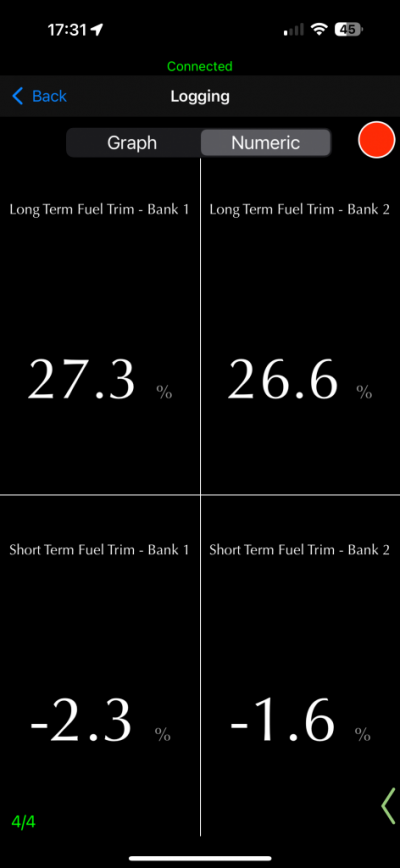
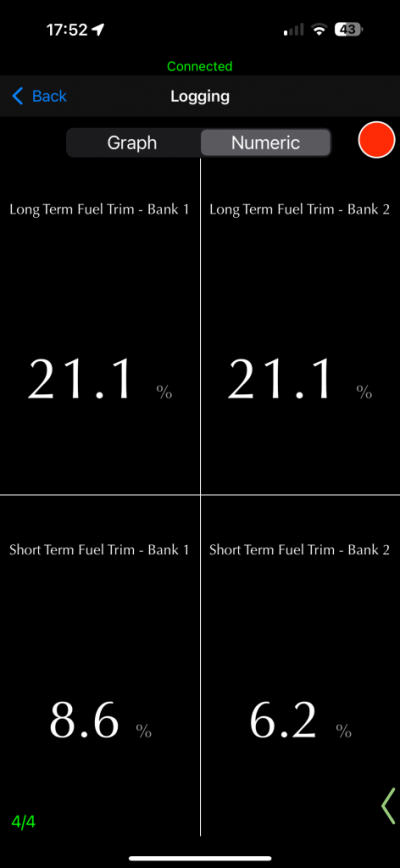
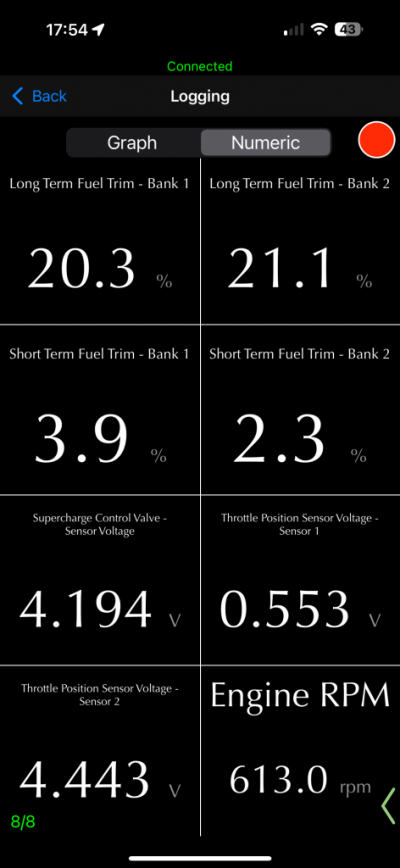
Ok, updated the tool and can see everything now. The car is running rich… super rich. The first screen shot is before I cleared the fuel adaptions. The second is after I cleared them and took a short drive around the block. Additionally, I pulled up some voltages that seem a bit high but could be normal. Please let me know what you guys think.
 

Attachments

  • IMG_2261.png
    IMG_2261.png
    54.8 KB · Views: 75
  • IMG_2265.png
    IMG_2265.png
    51 KB · Views: 69
  • IMG_2267.png
    IMG_2267.png
    97.9 KB · Views: 78

powershift

Full Access Member
Joined
Jul 20, 2023
Posts
1,105
Reaction score
385
Location
Nevada
How do you know its rich? Back when I drag raced we data logged only at WOT (99% as shown on 0 based index) to determine if it was lean, rich, timing advance, knock, ******, etc.
 

Jimmy Brooks

Full Access Member
Joined
Sep 15, 2019
Posts
837
Reaction score
283
Location
Pasadena California
How do you know its rich? Back when I drag raced we data logged only at WOT (99% as shown on 0 based index) to determine if it was lean, rich, timing advance, knock, ******, etc.

At idle when these cars are warmed up they I believe the general rule of thumb is long term-short term=<+/-10%. As you can see mine are way past that point.
 

greiswig

Supporting Member
Supporting Member
Joined
Mar 1, 2021
Posts
724
Reaction score
332
Location
SW Washington
Ok, updated the tool and can see everything now. The car is running rich… super rich. The first screen shot is before I cleared the fuel adaptions. The second is after I cleared them and took a short drive around the block. Additionally, I pulled up some voltages that seem a bit high but could be normal. Please let me know what you guys think.
Hard to interpret the numbers without RPMs, etc. My basic understanding is that if you have a vacuum leak, your STFT should drop as you raise RPM and the proportion of leak to metered air reduces. So maybe try that? Otherwise I wonder if maybe the O2 sensors are sending the wrong data?
 

Jimmy Brooks

Full Access Member
Joined
Sep 15, 2019
Posts
837
Reaction score
283
Location
Pasadena California
Hard to interpret the numbers without RPMs, etc. My basic understanding is that if you have a vacuum leak, your STFT should drop as you raise RPM and the proportion of leak to metered air reduces. So maybe try that? Otherwise I wonder if maybe the O2 sensors are sending the wrong data?

I’ll get the car warmed up and take some logs. Any specific RPMs you want me to hold it at? I think someone said 1500 but when I try to hold it there the rpms like to fluctuate 100-200 rpms up and down.

I could be wrong but wouldn’t it mean that both O2 sensors are bad since both banks read rich.

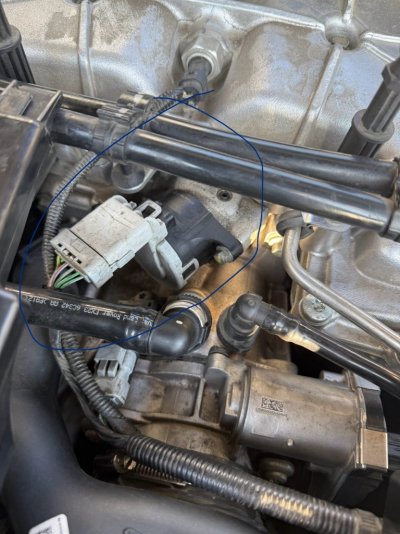
Also could you pull up the same voltages I did? I think both of those sensors that are reading high voltages are this same sensor here.

Here is a YouTube video of the RPMs fluctuating
 

Attachments

  • IMG_2268.jpeg
    IMG_2268.jpeg
    167.4 KB · Views: 64
Last edited:

jlglr4

Full Access Member
Joined
Mar 19, 2019
Posts
1,078
Reaction score
594
Location
Northern California
high positive = too lean, i.e., car is needing to add 20%+ fuel to try to reach the target air/fuel mixture. Car must be warmed up or it won’t be in closed loop, at which point it is just using scheduled air/fuel. After warm up, take the fuel trims at idle and holding steady at a couple of higher RPMs (around 1500, around 2500). Record with RPMs as well. If the fuel trims tend to get closer to zero with increasing RPMs, that points to a vacuum leak. If it gets worse with increasing RPMs, that points to fuel delivery problems.
 

Latest posts

Members online

Forum statistics

Threads
37,146
Posts
226,329
Members
31,263
Latest member
KyleK951
Top